Most of the systems that shape our lives appear stable.
Markets rise and fall within expected bounds. Climate patterns fluctuate within familiar ranges. Businesses grow, mature, and compete. Infrastructure quietly does its job in the background.
Until, suddenly, they don't.
A market crashes. A climate system crosses a tipping point. A supply chain collapses. A startup becomes a unicorn - or disappears overnight.
My work is driven by a fascination with these moments of transition.
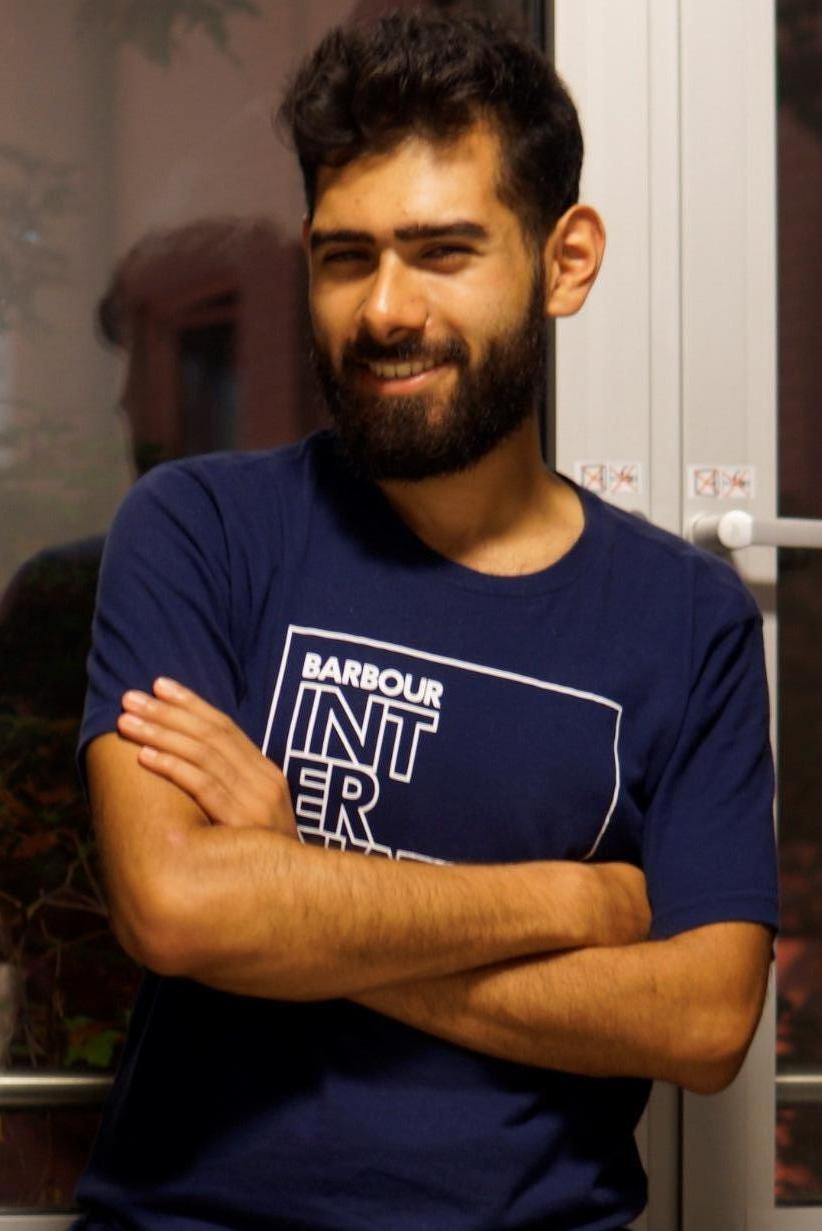
I'm Ben Shah, a quantitative researcher working at the intersection of mathematics, complex systems, climate risk, and finance. My research explores how systems behave when they're pushed towards critical thresholds, and how we might recognise the warning signs before change becomes irreversible.
Whether I'm studying chaotic dynamical systems, venture capital ecosystems, insurance risk, or climate tipping points, the goal is usually the same:
How we can understand uncertainty before it becomes disruption.
The world rarely changes gradually.
Often, major shifts arrive after long periods of apparent stability.
A lake remains clear until it suddenly turns toxic. A market remains calm until volatility erupts. An ecosystem survives decades of stress before crossing a point of no return.
These phenomena are known as critical transitions, and understanding them sits at the heart of my work.
Climate Risk & Tipping Points
Understanding how large-scale environmental systems respond to stress, and identifying early warning signals that could help governments, businesses, and insurers prepare for future change.
Metastability
Many systems spend long periods trapped in seemingly stable states before rapidly transitioning elsewhere. I study the mathematics behind these hidden dynamics.
Stochastic Processes & Uncertainty
Real-world systems are noisy. Randomness isn't a nuisance - it's often part of the story. I'm interested in how uncertainty influences rare events and unexpected outcomes.
Operator-Theoretic Methods
Using Koopman and Perron-Frobenius operators to reveal hidden structure within complex systems, identify transport pathways, and uncover long-term behaviour from data.
Quantitative Finance & Insurance
Applying ideas from dynamical systems and statistical physics to questions of market instability, catastrophe risk, and systemic resilience.
Progress doesn't always come from saying yes.
A few years ago, I would probably have accepted every conference invitation, project opportunity, and side collaboration that came my way.
Now I'm more interested in building depth than collecting experiences.
I believe:
Interesting ideas deserve time to mature.
Consistency beats intensity.
Expertise compounds slowly.
Timing matters as much as talent.
Not every opportunity is worth pursuing immediately.
Recently I was invited to present at a conference hosted by the Institute of Mathematics and its Applications.
It was a genuine honour.
I declined.
Not because it wasn't valuable, but because the work itself wasn't ready.
Research isn't a race to be seen. Sometimes the best decision is to remain focused, continue building, and contribute when the timing is right.
My path hasn't followed a straight line.
I studied Mathematics at the University of Dundee, where an interest in fluid dynamics and chaotic behaviour gradually evolved into a broader fascination with complexity, uncertainty, and critical transitions.
Since then I've worked across several very different environments:
Actuarial Science
Helping quantify long-term risk, uncertainty, and financial outcomes.
Higher Education Analytics
Building forecasting systems, improving operational processes, and translating data into strategic decisions.
Venture Capital
Evaluating startups, identifying patterns in emerging markets, and helping investors make decisions under uncertainty.
Academic Research
Developing mathematical tools for understanding metastability, tipping points, and transport phenomena in complex systems.
At first glance these roles appear unrelated.
To me they've always felt like variations of the same aim.
How we make decisions when the future is uncertain.
Satisfying curiosity in different ways.
Running
I'm a member of East End Road Runners and enjoy the simplicity of putting one foot in front of the other for a few hours.
Distance running has a habit of teaching patience better than any productivity book ever could.
Padel
Part sport, part chess match, part social gathering.
An ideal combination.
Photography
Photography encourages observation.
Many of the details worth noticing in both science and life tend to reveal themselves only when you slow down enough to look.
Travel
I've always enjoyed exploring unfamiliar places, cultures, and perspectives.
There's something valuable about regularly discovering how differently people organise their worlds.
Music & Creative Projects
Away from equations and code, I enjoy producing music, experimenting with visual media, and building creative side projects.
The process isn't as different from research as people often assume.
Both start with curiosity.
My proudest work happened outside formal employment.
As an ambassador for the Anne Frank Trust UK, I delivered talks and educational exhibitions; Reflecting on discrimination, prejudice, and the lasting consequences of intolerance.
More recently, through Kumon, I had the oppurtunity to work with London's most disadvantaged communities.
Education has always felt like one of the few interventions capable of changing the trajectory of an entire life.
Academic achievement matters; Confidence, resilience, and self-belief matter just as much.
If a student leaves believing they're capable of more than they previously imagined, that's usually the real success.